- What are the most efficient methods for Map Database To XML in 2026?
- How do modern tools simplify the Database XML Conversion process?
- What security considerations are paramount when mapping sensitive data to XML?
- Can Map Database To XML enhance my data integration strategy?
- Which programming languages offer the best support for XML Schema Mapping?
- How does relational database structure translate into hierarchical XML documents?
- What common challenges arise during data to XML conversion and how can they be overcome?
Keywords
Map Database To XML, Database XML Conversion, XML Mapping Tools, Data to XML 2026, Relational to XML, XML Schema Mapping, Data Integration XMLFrequently asked questions
How do I convert a SQL database to XML in 2026?
To convert a SQL database to XML in 2026, leverage tools like SQL Server's FOR XML clause, or use programming languages such as Python with libraries like xml.etree.ElementTree. Specialized ETL tools like Altova MapForce also provide visual interfaces for complex transformations. Define your XML schema first to guide the output structure effectively and accurately.
What are the best XML mapping tools for databases today?
The best XML mapping tools for databases in 2026 include Altova MapForce for its visual drag-and-drop interface, Microsoft SQL Server Integration Services (SSIS) for robust enterprise solutions, and open-source options like various Python libraries (e.g., lxml) for scripting flexibility. Cloud platforms also offer services for data transformation that handle XML output.
How does an XML schema relate to database-to-XML mapping?
An XML schema (XSD) serves as the blueprint for your target XML structure, defining elements, attributes, and data types. In database-to-XML mapping, this schema guides how database tables and columns correspond to the XML elements, ensuring the generated XML document is valid, well-structured, and semantically accurate according to your business rules.
What are the common challenges when mapping relational data to XML?
Common challenges in mapping relational data to XML include handling complex join operations, dealing with null values, managing data type conversions, and resolving structural differences between flat relational tables and hierarchical XML. Redundancy control and performance optimization during large-scale conversions also present significant hurdles that require careful planning and efficient algorithms.
Can I automate the process of mapping a database to XML?
Absolutely, automating database-to-XML mapping is standard practice. You can use custom scripts in languages like Python, Java, or C#, employing database connectors and XML parsing libraries. Many commercial ETL (Extract, Transform, Load) tools and database management systems also offer built-in functionalities or wizards to automate this conversion efficiently and reliably for routine tasks.
Why is Map Database To XML important for modern applications?
Mapping databases to XML is crucial for modern applications due to its role in data interoperability, enabling seamless data exchange between disparate systems and platforms. It supports web services (SOAP), configuration files, and data archiving. This flexibility allows applications to consume and produce structured data regardless of their internal storage mechanisms, driving integration and modularity across the digital ecosystem.
Understanding how to map database structures to XML is more critical than ever in 2026, especially for businesses in the digital sector. Whether you are migrating legacy systems, integrating disparate applications, or preparing data for web services, converting relational data into a flexible XML format unlocks new possibilities. This guide provides a straightforward approach to mastering this essential skill, ensuring your data remains accessible and interoperable across various platforms. Get ready to transform complex database schemas into clean, hierarchical XML documents, simplifying data exchange and boosting your project's efficiency.
Mapping a database to XML involves defining how elements and attributes in an XML document correspond to tables, columns, and relationships within a relational database. This process is fundamental for data serialization, enabling structured data to be transmitted and consumed by different systems regardless of their underlying database technology. Effective mapping ensures that the semantic meaning of your data is preserved, preventing data loss or misinterpretation during conversion. Developers often use various tools and programming languages to automate this intricate process, making it a cornerstone of modern data architecture and integration strategies today.
Core Understanding Fundamentals
Mapping databases to XML is essentially about creating a bridge between two distinct data models: the tabular, structured world of relational databases and the hierarchical, self-describing nature of XML. This transformation is pivotal for tasks like data warehousing, API development, and content syndication. The core challenge lies in translating the inherent relational joins and keys into an XML tree structure while maintaining data fidelity and minimizing redundancy. Mastering this balance is key to producing clean, valid XML output that accurately represents your original database information. It’s a process that demands careful planning and a deep understanding of both data formats.
Successful database-to-XML mapping begins with a well-defined XML schema (XSD), which acts as a blueprint for your target XML structure. This schema dictates the elements, attributes, and their relationships, guiding how data from your database will be organized. Once the schema is established, you identify the corresponding database tables and columns for each XML component. This often involves intricate queries, views, or even stored procedures to flatten or denormalize data for easier XML representation. Effective mapping tools or custom scripts then automate the extraction and structuring, turning raw database entries into perfectly formed XML documents ready for their intended use.
Frequently Asked Questions
Where can I find the best tools to Map Database To Xml in 2026?
The absolute best resources for mapping tools include Microsoft SQL Server Integration Services (SSIS) and Altova MapForce. For open-source options, consider Python libraries like xml.etree.ElementTree combined with database connectors.
How do Local MAPs help with Map Database To Xml projects?
Pull up your preferred mobile Maps app to verify real-time hours for local tech meetups or co-working spaces. Navigating to these community hubs offers chances to network with experts who share tips on advanced Map Database To XML techniques, as peak weekend times fill up fast.
What are the best times to optimize Database to XML mapping processes?
Optimize your mapping processes during the initial data modeling phase or when refactoring existing integrations. Practical tips:
- Review XML schemas regularly.
- Batch convert during off-peak hours.
- Implement robust error logging.
Key highlights
Gallery
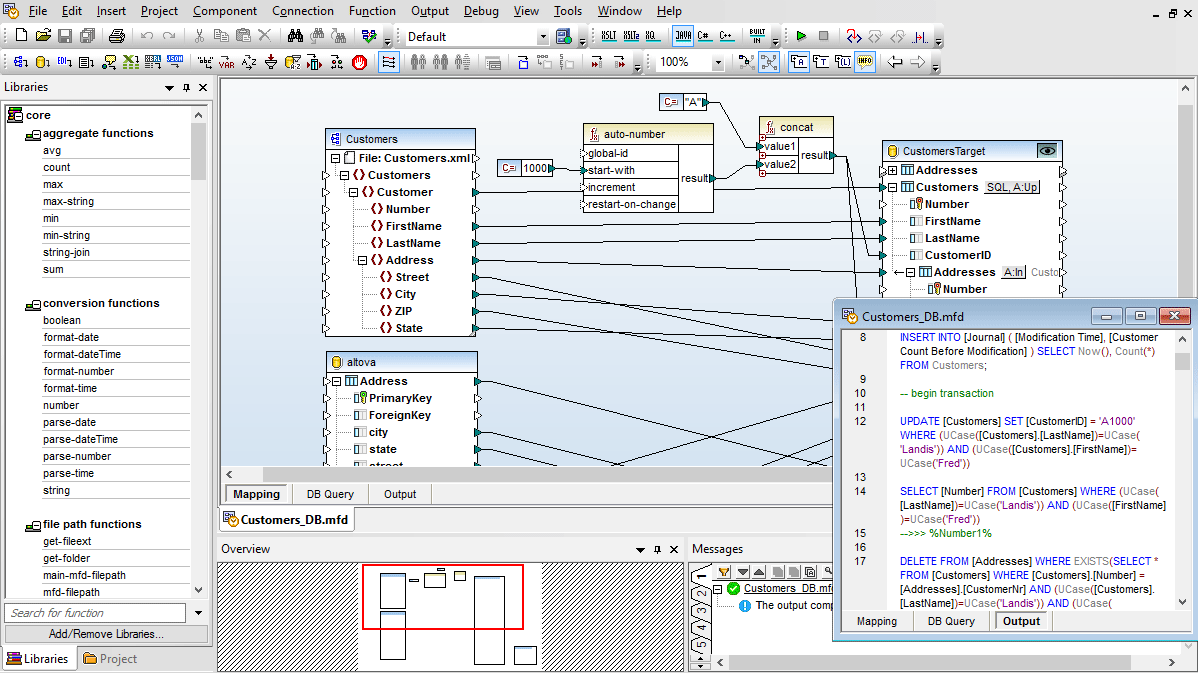


XML Mapping Altova Mapforce Database 2026 Enterprise Edition Xmldb The Ultimate Guide To In 2026 Macbook Air PPT And Databases Powerpoint Presentation Free Download ID 6415059 Data L With Oracle Gateway PDF How Create Map At Claire Brownless Blog Maxresdefault Output Creating An Format SAP Community IMAGE3 Using For Legends Surround DIGITAL TECHNIQUES 2005 Slide Sitemaps 2026 NO BS Marketplace 2026 Infographic 20260406075705 Iuhkrign 2026 20260406075705 Mqdefault SQL Mongodb Roadmap 2026 Top Modules 2026.


XML Sitemap Strategy 2026 Segmentation Crawl Budget Optimization Hero En What Is Best Guide For 2026 Gemini Generated Image OIHPL6OIHPL6OIHP Mapping Of Document And Relational Database Using Structural How To Create An In Steps 2026 Thestacc Anatomy Practices The 2026 SEO Scheme From Scientific Net Preview Indexnow Vs Google Indexing API Sitemaps Actually Works Generator Free Tool Build Any Site Searchengineland Convert ACORD A 2026 Blog Banner PPT Powerpoint Presentation N Remove Excel Maps At Holly Stine Ultimate 2026 Sonra Converting JSON Data With Upload Options.


How To Insert XML Into SQL Tables 2026 Guide Convert Iso 20022 Relational Database 20022 XSD Generate From Files 2026 Conversion DB Designer 2025 Recap 2026 Roadmap AI Driven Design Chatgpt Image Jan 2026 AM 2026 Sitemap Setup 2026 For Faster Indexing Excel XLSX Import Open Databases Types Options And Migration PDF MAXDOR Mapping Document Mini MAGICK20190127 17052 I3PAY6 MAGICK20190127 17052 I3PAY6 Stylus Studio Mapper Big CVE 2026 88794 CWE 611 Improper Restriction Of Threat Radar Og Create An Map With The 008292992 41338a03246b003acc3e8ed622af9900 008292992 41338a03246b003acc3e8ed622af9900 Ultimate In 2026 Word 23074.